







- Procedure and Guidelines for Engagement of Senior Consultants/Consultants Grade-2/Consultants Grade-I/ Young Professionals in NITI Aayog, 2023
- Inviting application for engagement of Consultants (Grade-I) and Young Professionals on contractual basis.
ABOUT
EAC-PM
Economic Advisory Council to the Prime Minister (EAC-PM) is an independent body constituted to give advice on economic and related issues to the Government of India, specifically to the Prime Minister. At present, there are a Chairman, 3 Full-Time Members and 11 Part-Time Members in the EAC-PM.
The composition of EAC-PM is as follows:
Sh. Sanjay Kumar Mishra
Sh. Sanjeev Sanyal
Dr. Shamika Ravi
Sh. Rakesh Mohan
Dr. Sajjid. Z. Chinoy
Sh. Neelkanth Mishra
Sh. Nilesh Shah
Prof. T. T. Ram Mohan
Dr. Soumya Kanti Ghosh
Prof. K. V. Raju
Prof. Chetan Ghate
Prof. Pami Dua
Prof. Pulak Ghosh
Sh. Gaurav Vallabh
The Terms of Reference of EAC-PM include analyzing any issue, economic or otherwise, referred to it by the Prime Minister and advising him thereon, addressing issues of macroeconomic importance and presenting views thereon to the Prime Minister. These could be either suo-motu or on reference from the Prime Minister or anyone else. They also include attending to any other task as may be desired by the Prime Minister from time to time.

Team
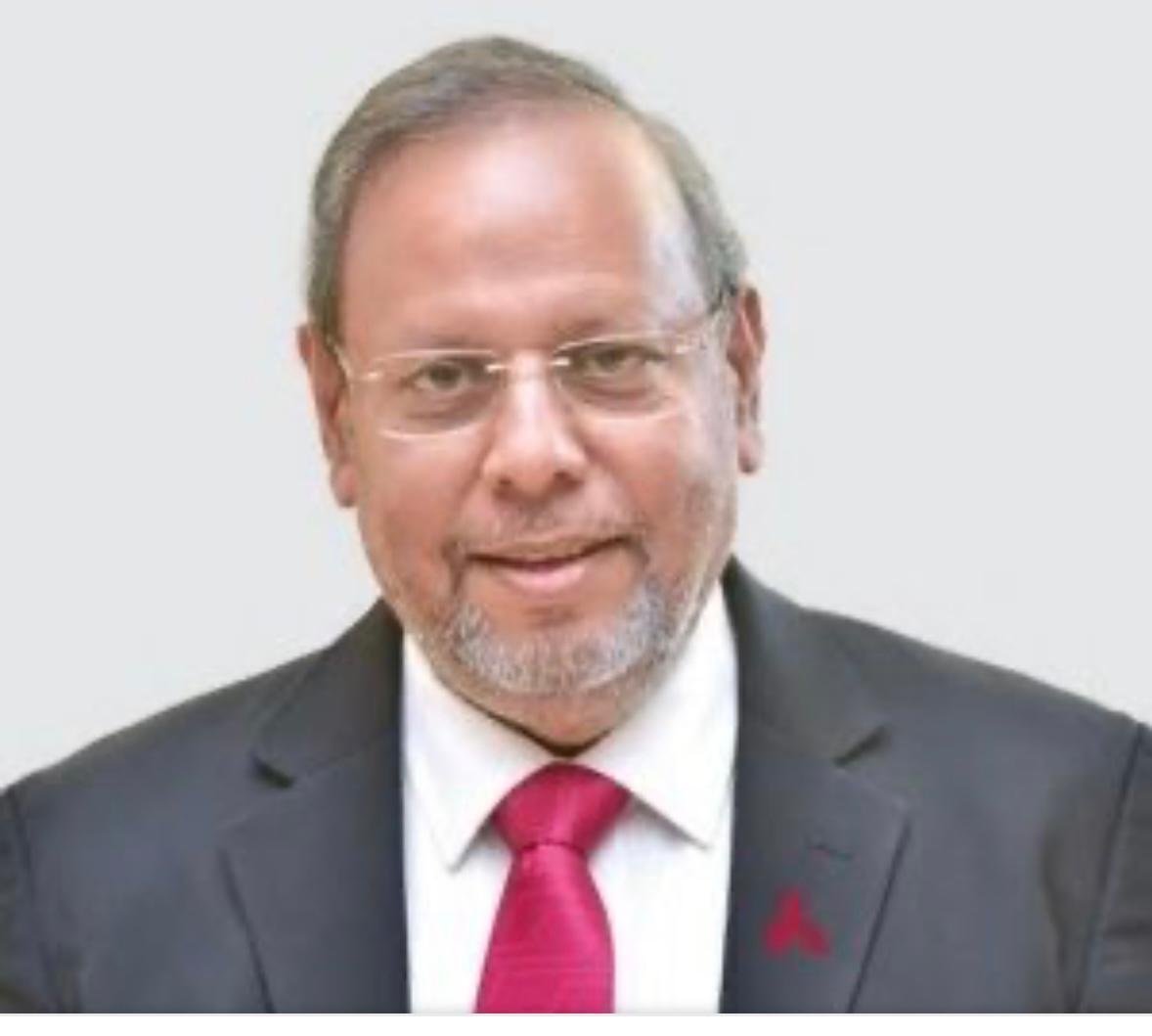
Prof. S. Mahendra Dev
Chairman
Shri Sanjeev Sanyal
Member
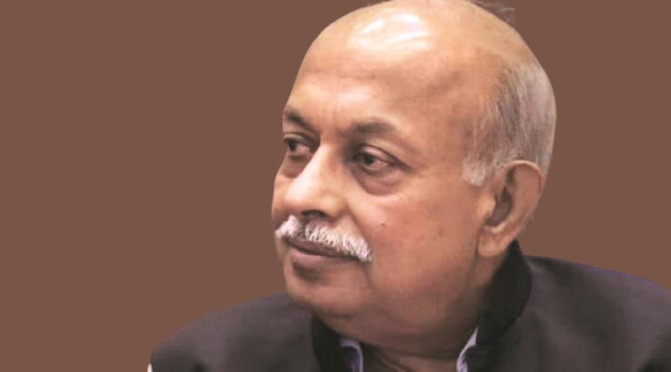
Shri Sanjay Kumar Mishra
Member

Dr. Shamika Ravi
Member
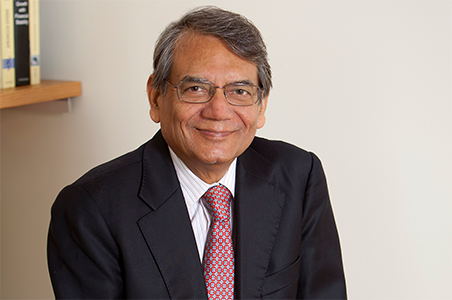
Dr. Rakesh Mohan
Part-Time Member
Dr. Sajjid Z. Chinoy
Part-Time Member

Shri Neelkanth Mishra
Part-Time Member

Prof. Pulak Ghosh
Part-Time Member


Reports
The World in Purchasing Power Parity (Trends since 1992)
Most papers regarding relative economic performance of countries deal with either nominal or real GDP. This paper focuses on four indicators of relative long-term economic performance in Purchasing Power Parity (PPP) terms: (i) share in world GDP, (ii) relative per-capita income, (iii) share in world savings and (iv) share in world investment. This provides a useful long-term perspective unclouded by exchange rates and relative prices.
View
The Duck and The Camel: Tracing the Net Load on the Indian Power Grid
A power grid has to perform a continuous balancing act. At every moment, the total electricity being produced (the ‘generation’) must match the total being consumed (the 'load'). For most of its history, the central worry about the grid was whether there was enough generation capacity. Over the last decade, India has answered that question emphatically. It added generating capacity at remarkable speed, and built a large fleet of solar power, rising to over 157 GW by May 20261.
View
Unconditional Women Cash Transfer Programmes in India: Evidence from Maharashtra and Odisha
Cash transfer programmes targeted at women have become one of the fastest-growing categories of state-level welfare spending in India. By FY26, more than fifteen states had introduced some form of unconditional monthly or annual transfer paid directly into women's bank accounts, at an estimated aggregate cost of roughly Rs 1.7 lakh crore and reaching close to 12 crore women. The number of states running such schemes increased more than five-fold between FY23 and FY26 reflect a convergence of evidence from development economics and political economy; direct income support placed in women’s hands is a powerful and cost effective instrument for improving household welfare, advancing financial inclusion and reducing gender-based economic exclusion.
View
Formalization of Labour Market in India: Evidence from PLFS and ASUSE 2025 Unit-Level Data
India’s labour market and its large informal enterprise sector present two interlinked development challenges. On the labour side, the persistence of informal employment, low female labour force participation, minimum wage non-compliance, and an expanding youth workforce have been central concerns in India’s employment discourse (World Bank, 2016; La Porta and Shleifer, 2014). On the enterprise side, the unincorporated sector comprising household-owned and individually operated firms outside the Companies Act continues to account for a substantial share of employment and output, yet remains constrained by low productivity, limited access to institutional credit, and weak integration into formal regulatory and financial systems (NCEUS, 2009). Recent policy interest has converged on two levers for addressing these challenges simultaneously: ICT adoption/digitalisation2 and enterprise formalization. ICT adoption has been identified as a potential productivity-enhancing mechanism for micro and small enterprises, while government-sponsored registration programmes such as Udyam and Udyam Assist have been introduced with the explicit aim of extending formal credit access to previously excluded firms. Understanding whether and to what degree these two pathways deliver on their intended objectives requires rigorous empirical analysis using representative data.
View
Constituency Size, Composition and the Case for Delimitation in India’s Lok Sabha (2009–2024)
India’s parliamentary constituencies are very large by global standards: the median Lok Sabha Parliamentray Constituency (PC) electorate reached 1.82 million registered electors in 2024. The conventional reading of Indian turnout has been that very large PCs suppress voting; we show this “size penalty” is now a compositional artefact. Across 2,171 PC-elections in 2009, 2014, 2019 and 2024, the unconditional small-vs-large decile turnout gap halved from +22.86 to +12.03 percentage points (pp), yet the conditional 1 M-vs-2 M turnout gap crossed from +1.42 pp (95% CI: −2.85, +5.69) in 2009 to −6.16 pp (95% CI: −10.30, −2.02) in 2024 once urban, SC, ST shares, Esteban–Ray linguistic polarisation, Shannon linguistic diversity (122-language grain) and polling-station density are controlled. Urban share is the largest single compositional channel associated with female turnout at 52.4 % (95% CI: 44.6, 60.2), followed by linguistic diversity at 28.2 % (95% CI: 21.4, 35.1) and linguistic polarisation at 20.6 % (95% CI: 14.3, 27.0); linguistic diversity also displays an opposite-sign gender split (men: −8.2 %). A turnout-maximising delimitation counterfactual that splits 543 PCs into 824 (59 two-way, 111 three-way) holding parent-PC compositional covariates fixed is predicted to raise national turnout by +2.32 pp (95% CI: +1.43, +3.21) under our preferred specification, with substantial sensitivity to alternative specifications: re-running the same exercise under three alternative specifications returns +1.42 pp, +1.17 pp and +0.30 pp respectively, giving a defensible range of +0.3 to +2.3 pp. The plan delivers a small female-favourable tilt of +0.21 pp (95% CI: −0.14, +0.56).
View
How to do Process Reforms: Case study of IEPFA
Economic reform debates usually tend to gravitate towards the big reforms. Reforms such as tax system overhauls, introduction of Insolvency and Bankruptcy Code (IBC), inflation targeting usually dominate headlines. These are structural reforms, which make changes to the underlying framework of an economy. While such reforms are important, they overlook a quieter but equally powerful source of improvement, which we term as ‘process reforms’.
View
News